Mandala Invitation Decorative Art
A Designer’s First Glance: Graceful, Grounded, and Ready for Stitching
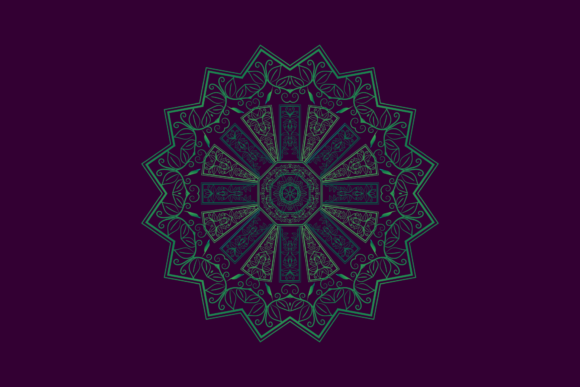
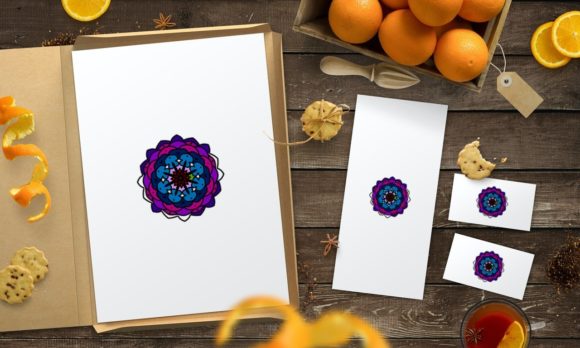
When I opened Mandala Invitation Decorative Art, my eye settled instantly on its quiet symmetry — not fussy, not overwrought, but deeply intentional. The 1920px × 1280px canvas gives breathing room without sacrificing detail, and the mandala’s layered rings feel like a gentle invitation rather than a visual demand. It’s clearly designed for elegance over edge — think baby shower towels, boutique aprons, or linen pillow covers for a calm nursery, not high-contrast streetwear. As a designer who regularly translates digital art into stitched reality, I appreciated how the outer motifs taper cleanly and how negative space is used thoughtfully. That’s rare in decorative graphics meant for embroidery — too many “pretty” designs collapse under thread weight.
How It Performs on Real Embroidery Projects
I tested Mandala Invitation Decorative Art as the centerpiece for a custom embroidered cotton tote bag — one destined for a local yoga studio’s client gift program. On medium-weight natural canvas with tear-away stabilizer, the design stitched cleanly at roughly 5.5" wide. The concentric elements held their shape; no puckering, no skipped satin stitch segments. Because the layout avoids tight inner spirals or micro-details, it translated well to both sweatshirt embroidery (using cutaway stabilizer) and lightweight tea towels (with light iron-on backing). As an applique design? It works — especially if you use a subtle fabric like chambray or ivory linen for the base layer.
It also shines in baby embroidery contexts. I stitched a scaled-down version (4.2") onto a bamboo-cotton onesie — the open center allowed for softness against delicate skin, and the balanced density prevented stiffness. For holiday embroidery or wedding gifts, this mandala reads as timeless rather than trend-dependent. A small shop owner could easily pair it with minimalist monograms or short phrases like “Blessings” or “Gather” — no redesign needed.
Where to Use It Thoughtfully — Not Everywhere
That said, Mandala Invitation Decorative Art isn’t a universal fit. Its graceful scale and moderate detail mean it needs room to breathe. Avoid cramming it into hoops smaller than 5" — corners will lose definition, and fill stitch transitions may blur. On highly textured fabrics like bouclé or thick terry cloth, consider simplifying outer rings in your editing software before stitching. Thin or stretchy fabrics (think jersey or rayon blends) require extra stabilizer layers and slower machine speeds; test first.
Dark fabric backgrounds call for careful thread color selection — avoid low-contrast combos like charcoal grey thread on navy denim. And while it’s lovely on flat surfaces, skip curved applications like cap fronts unless you’re using a multi-needle commercial setup. The outer bands don’t distort gracefully on rigid curves, and tiny decorative accents near the perimeter can shift or vanish mid-stitch.
What It Adds to Your Handmade Product — and What It Doesn’t
This isn’t a “wow-factor” design — it’s a trust-builder. When customers see Mandala Invitation Decorative Art on a handmade product, they sense care, intention, and quiet craftsmanship. It elevates a simple kitchen towel into a curated gift. It adds sophistication to an Etsy seller’s patch collection without shouting for attention. For craft business owners, it supports brand consistency across seasonal collections — imagine it stitched in sage green on linen napkins, then in terracotta on ceramic coasters with matching embroidery.
But it won’t carry weak execution. If your stitch density is off or your hoop tension inconsistent, the mandala’s subtlety becomes vulnerability — not charm. Likewise, it doesn’t compensate for poor fabric choice or rushed finishing. Its strength lies in harmony, not dominance.
Practical Notes Every Embroidery Designer Should Check
- Always test on scrap fabric first — especially if stitching on dark, textured, or blended materials.
- Review stitch density before running full production. Dense fill areas may need reduced density for breathability on apparel.
- Confirm hoop size compatibility — the 1920px × 1280px canvas suggests flexibility, but verify your machine’s max hoop dimensions match your intended scale.
- Inspect small details at actual stitch size — zoom in on inner rings and line weights in your embroidery software.
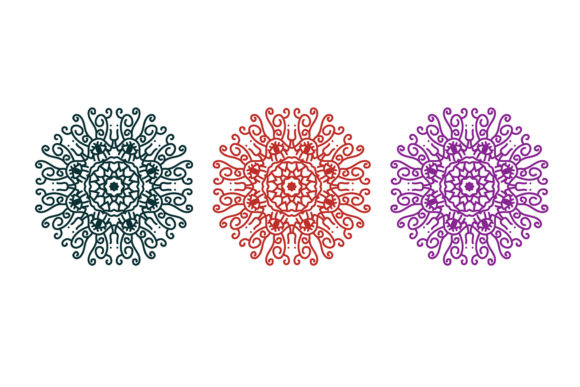
- Test in black-and-white mockups — does the contrast hold up when converted to single-color thread?
- Compare light and dark fabric backgrounds — some motifs recede on black; others pop unexpectedly on cream.
- Use appropriate stabilizer — cutaway for knits, tear-away for stable wovens, and fusible for lightweight linens.
- Verify licensing terms — since this is listed as a Graphics product in the Patterns category, confirm whether resale of finished embroidered items or redistribution of the digital embroidery file is permitted.
Final Thought: A Quiet Anchor in a Busy Creative Practice
Mandala Invitation Decorative Art won’t go viral on social media — and that’s its superpower. In a market flooded with loud, trendy, over-digitized machine embroidery designs, this one offers grounded versatility. It fits naturally into slow-made product lines, thoughtful gifting, and small-batch branding. Whether you're an Etsy seller building a cohesive shop aesthetic, a craft fair vendor curating tactile merchandise, or a home-based embroiderer creating personalized baby items, this design earns its place not through flash, but through fidelity — to form, to function, and to the quiet dignity of handmade work.