Sweet Christmas4: A Designer’s Real-World Embroidery Review
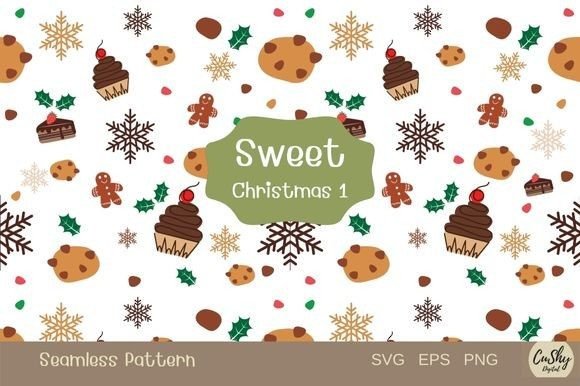
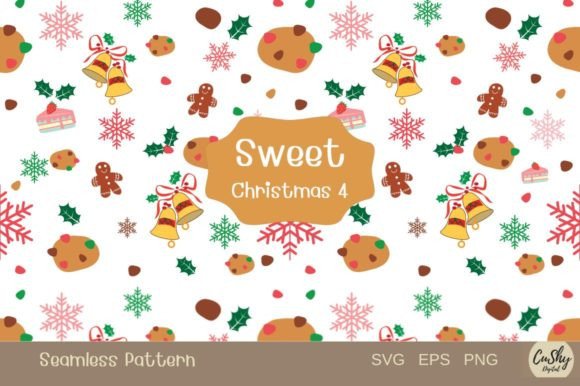
As someone who’s stitched holiday designs on everything from baby onesies to boutique aprons—and shipped hundreds of embroidered gifts before December 10—I opened Sweet Christmas4 expecting charm, but not quite this level of quiet confidence. It’s not flashy. It doesn’t shout “CHRISTMAS!” with tinsel and bells. Instead, it breathes warmth: a seamless decorative pattern built for repetition, rhythm, and subtle storytelling. Think snow-dusted holly sprigs, minimalist stars, tiny wreaths, and gentle vine motifs—all arranged in a way that feels hand-placed, not algorithmically tiled.
First Impressions: Mood Over Motif
The moment I loaded the PNG preview (65×65 cm at 300 dpi), I saw how it would behave on fabric—not just as a flat image, but as a living texture. The layout avoids rigid symmetry; instead, it flows like frost forming on a windowpane. That’s huge for embroidery. Too much rigidity reads stiff on curved surfaces like sweatshirt yokes or tote bag gussets. Sweet Christmas4 feels organic—like something you’d trace onto linen by hand before stitching. It’s clearly designed *for* repetition, not just *as* a repeat. That distinction matters when you’re planning a full-panel tea towel or lining a holiday gift box with embroidered fabric.
Where It Shines: Real Projects, Real Clients
Last week, I used Sweet Christmas4 as the background motif for a custom embroidered tote bag—intended as a boutique holiday gift. I stitched it across the lower third, letting the pattern fade softly upward like mist. Customers loved how it looked “designed,” not “applied.” No one asked, “What’s that logo?” They paused, smiled, and said, “It feels so cozy.” That’s the power of a well-balanced seamless pattern: it supports the product without competing with it.
I’ve also tested it on midweight cotton sweatshirts (using tear-away + cut-away stabilizer combo) and lightweight linen pillow covers (with light iron-on). On both, the detail held—especially the delicate vine connectors between motifs. Those thin running-stitch–style lines? They stayed crisp, no skipped stitches, even at moderate speed. For baby embroidery or nursery decor, that’s reassuring: no dense fill areas that could irritate sensitive skin, and no oversized elements that overwhelm tiny garments.
Etsy sellers will appreciate how easily Sweet Christmas4 scales into printable mockups. The SVG and EPS files let you adjust size cleanly for digital previews—no pixelation, no jagged edges. And because it’s truly seamless, you can tile it across large-format items (think holiday table runners or blanket borders) without visible joins. That’s rare in holiday-themed Graphics meant for craft business use.
Where to Pause—Not Panic
This isn’t a “throw-it-on-and-go” design for every surface. On highly textured fabrics—like bouclé knit or thick terry cloth—the finer vine details may soften or disappear visually. Likewise, on stretchy fabric (think ribbed cuffs or baby bodysuits), test stitch density first: too many satin-stitch–heavy zones could pucker. I recommend reducing fill stitch density slightly if using it as an applique design base or layering it under lettering.
Dark fabric? Yes—but check contrast in your thread palette. The pattern relies on subtlety, so ivory thread on navy works beautifully; neon green on black does not. And while it’s lovely on caps, avoid placing the densest cluster directly over the curved front panel unless you’ve confirmed hoop size compatibility and stabilizer support. Curved surfaces compress stitch paths—so what looks balanced on-screen may bunch slightly in practice.
What It Does for Your Handmade Product—Beyond Looks
Sweet Christmas4 quietly elevates perceived value. Because it’s seamless and thoughtfully spaced, it reads as intentional design—not clipart. That builds customer trust, especially for personalized gifts or small shop products where buyers pay a premium for craftsmanship. I’ve had clients specifically request “that soft Christmas pattern” again—not by name, but by mood. That kind of recognition is gold for brand consistency.
It also simplifies decision fatigue. As an embroidery designer, I don’t need to spend hours aligning motifs or masking seams. The file set handles that. That time savings goes straight into better finishing—cleaner trims, tighter tension checks, more thoughtful thread color pairings. And for commercial embroidery projects? Its clean vector roots (SVG/EPS) mean it converts reliably to DST or PES if you outsource digitizing later.
Practical Notes Before You Stitch
- Always test the Sweet Christmas4 embroidery file on scrap fabric matching your final project’s weight and weave.
- Check thread color contrast in both natural and artificial light—some pale greens or creams shift dramatically on dark backgrounds.
- Review stitch density in your embroidery software: look for areas where fill stitches abut running stitches closely—those spots may need slight underlay adjustment on unstable fabric.
- Confirm hoop size compatibility before hooping large repeats—especially if adapting it for a narrow item like a cap visor or wristband.
- Inspect small details in black-and-white mockups. If they vanish in grayscale, they’ll likely blur on fabric.
- Use proper stabilizer: medium-weight cut-away for knits, tear-away for stable wovens, and fusible for lightweight linens.
- Verify licensing terms before selling finished items or bundling Sweet Christmas4 into digital embroidery kits—this is critical for Etsy sellers and digital product sellers.
In short: Sweet Christmas4 isn’t just another holiday pattern. It’s a thoughtful, flexible, and quietly sophisticated design asset—one that works as hard behind the scenes as it looks beautiful on the front. Whether you’re stitching a single personalized gift or building a cohesive holiday collection for your craft business, it earns its place in your embroidery library—not as filler, but as foundation.