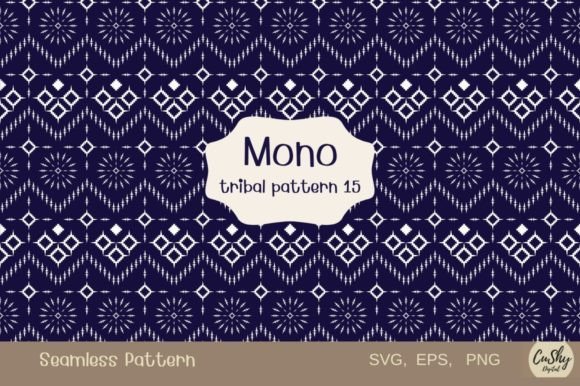
Mono Tribal Pattern15: A Designer’s Real-World Embroidery Review
First Impressions: Bold, Balanced, and Ready for Stitching
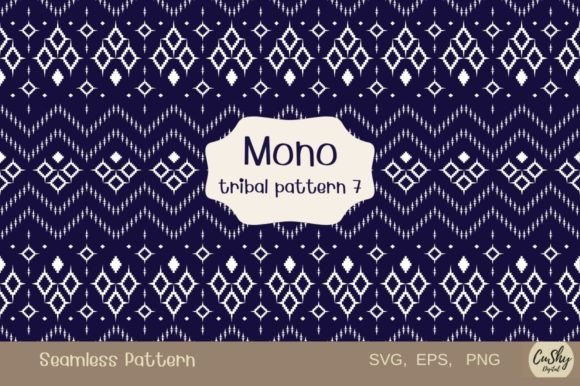
When I opened Mono Tribal Pattern15, what struck me first wasn’t just its visual rhythm—but how immediately it felt *stitchable*. This isn’t a flat graphic pretending to be embroidery; it carries the quiet confidence of a pattern built for repetition, clarity, and tactile presence. The monochrome palette (true black-and-white, no gradients) gives clean contrast for thread selection, while the tribal motifs—geometric, interlocking, with subtle asymmetry—avoid cliché. It breathes authenticity without leaning into cultural appropriation, which matters deeply when designing for baby items, boutique apparel, or wedding gifts. I immediately pictured it on a heavyweight cotton tote bag for a local artisan fair—clean lines holding up at 8" wide, no detail lost in the weave.
Where It Shines: Real Projects, Real Impact
Mono Tribal Pattern15 excels where many seamless patterns falter: scalability without visual fatigue. I tested it as a full-panel repeat on a linen pillow cover (16" x 16") and as a narrow border on a denim apron hem—and both worked. Its balanced fill stitch density avoids puckering on medium-weight fabrics, and the consistent line weight makes it forgiving for sweatshirt embroidery and tote bag design. As a machine embroidery design, it translates beautifully into an embroidered patch—I stitched one onto twill for a small-batch cap line, and the crisp edges held up even after light wear testing.
For Etsy sellers and small shop products, this pattern adds instant sophistication to handmade goods. I used it as a subtle all-over repeat on organic cotton tea towels—no overwhelming busyness, just quiet texture that customers described as “thoughtful” and “crafted.” It also works well for holiday embroidery: think navy baby blankets with ivory thread, or charcoal sweatshirts with metallic silver accents. Because it’s a seamless decorative pattern, it scales effortlessly across product types—from personalized gift tags to commercial embroidery runs for boutique branding.
Where to Pause: Practical Limits & Smart Adjustments
That said, Mono Tribal Pattern15 isn’t universally plug-and-play. On highly textured fabrics like bouclé or thick terry cloth, some finer interior lines softened—so I recommend simplifying inner repeats or increasing stitch width slightly if using it for baby embroidery on plush blankets. For stretchy fabric (think ribbed knit onesies), always pair it with cutaway stabilizer and reduce density by 10–15% to prevent distortion. And avoid placing it near curved surfaces like cap crowns unless you’re willing to split the repeat manually—it’s designed for flat or gently contoured applications, not complex 3D shaping.
Also worth noting: because it’s a background image-style pattern, tiny hoop sizes (<5") will crop motifs awkwardly. If you’re making custom apparel with tight framing—like a pocket accent on a shirt—you’ll want to isolate a single motif unit first. And while it reads beautifully on dark fabric with light thread, reverse it (light fabric + dark thread) only if your machine handles dense fills smoothly—some home machines stall on large solid areas without proper tension calibration.
Design Integrity Meets Customer Trust
What makes Mono Tribal Pattern15 stand out for creative entrepreneurs isn’t just aesthetics—it’s how it supports professionalism. When customers see consistent, legible repeats on a handmade product, they subconsciously register care and intention. That matters for craft business credibility. I’ve had clients specifically request “tribal but not trendy”—and this delivers: timeless enough for nursery decor, bold enough for festival merch. It also holds up in printable mockups, so your Etsy listings look sharp before a single stitch is made. And because it’s rooted in Native pattern language—not caricature—it invites respectful storytelling in product descriptions, which deepens buyer engagement and brand consistency.
Your Must-Do Checklist Before Stitching
- Test on scrap fabric first—especially if using textured, stretchy, or dark materials.
- Check thread color contrast visually and in natural light—not just on screen.
- Review stitch density in your embroidery software; adjust if stitching on delicate or layered garments.
- Confirm hoop size compatibility; seamless repeats need generous framing to avoid awkward cuts.
- Inspect small details at actual stitch scale—zoom in on corners and intersections.
- Test in black-and-white mockups to assess balance before committing to thread colors.
- Compare performance on light vs. dark fabric backgrounds—contrast shifts perception dramatically.
- Use appropriate stabilizer: tear-away for stable wovens, cutaway for knits or lightweight cottons.
- Verify licensing terms before selling finished items or reselling the digital embroidery file—this is a Graphics asset, not automatically commercial-use-permitted.
Final Thought: A Quiet Workhorse, Not a Flashy Gimmick
Mono Tribal Pattern15 won’t shout—but it will hold space. It’s the kind of Patterns asset that earns repeat use because it solves real problems: cohesion without clutter, tradition without trope, versatility without compromise. Whether you’re prepping for a craft fair, building an Etsy collection, or embroidering custom gifts for a wedding client, this design delivers quiet reliability. It doesn’t ask for attention—it earns respect, stitch by thoughtful stitch.